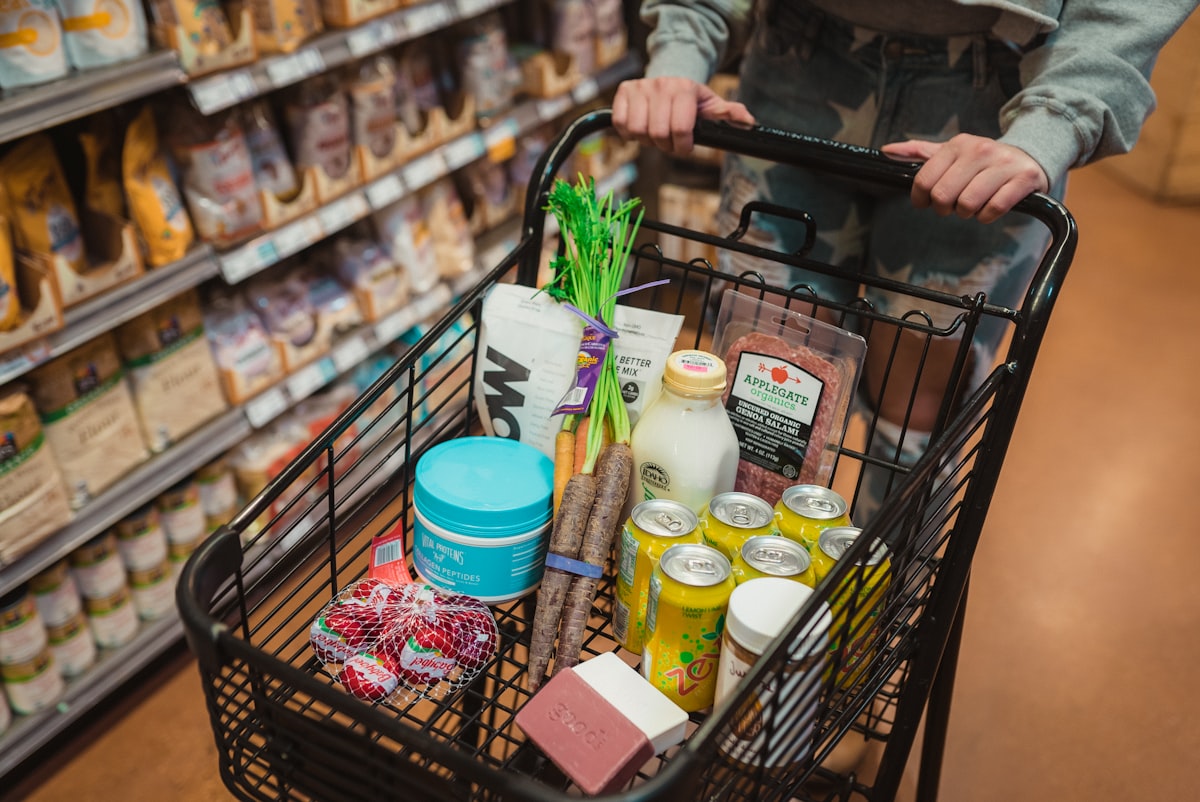
I thought I ate pretty healthy. Chicken and rice most nights. Salads a few times a week. I buy bananas. I drink water. I'm not out here crushing a family-size bag of Doritos every Tuesday.
Then I started tracking.
For 30 days, I scanned every single grocery receipt — every supermarket run, every quick gas station stop, every online grocery order. The goal was simple: find out what percentage of my cart was ultra-processed food (UPF).
The answer? It wasn't what I expected.
The Setup
I used Mount Dorito to scan each receipt. The app classifies every item using the NOVA food processing scale and gives you a single number: your UPF percentage. That's the share of your items that fall into NOVA Group 4 — the ultra-processed category.
The rules were straightforward:
- Scan every receipt, no skipping
- Include grocery runs AND dining out
- Don't change my habits for the first two weeks — just observe
- Only start making swaps in weeks 3 and 4
Week 1: The Reality Check
My first scan was a regular Tuesday Costco run. 38 items. I figured I'd come in around 30% UPF — after all, I was buying chicken, broccoli, and rice.
The score: 62% UPF.
I stared at the number. That couldn't be right. I scrolled through the item list and there it was — the stuff I don't think of as "junk food":
- Protein bars (12-pack) — ultra-processed. They're engineered food products with 20+ ingredients.
- Kirkland granola — ultra-processed. Sugar, seed oils, emulsifiers.
- Whole wheat bread — ultra-processed. Dough conditioners, high-fructose corn syrup, preservatives.
- Flavored Greek yogurt — ultra-processed. Artificial sweeteners, stabilizers, modified starch.
- Pre-made pasta sauce — ultra-processed. Sugar is the third ingredient.
None of these items felt like "junk food". But by the NOVA definition, they absolutely are. The chicken and broccoli were real — but they were outnumbered.
The most dangerous UPF isn't the stuff you know is bad. It's the stuff you think is healthy.
Want to try this yourself?
Scan your next grocery receipt with Mount Dorito and find out your UPF number — it takes 3 seconds.
Try It Free →
By the end of Week 1, my running average across 3 trips was 58% UPF. Almost exactly the American average [1].
Week 2: The Patterns Emerge
By the second week, I started noticing patterns. The app's repeat buy tracking showed my worst offenders — items I kept buying trip after trip. My top 5 repeat UPF purchases:
- Protein bars
- Flavored sparkling water (with artificial sweeteners)
- Pre-made salad dressings
- Breakfast cereal
- Deli turkey slices
The spending data was equally revealing. Of the $847 I spent on groceries in the first two weeks, $492 went to ultra-processed items. That's 58% of my grocery budget going to food that studies link to increased risk of heart disease, diabetes, and depression [2].
Week 2 average: 55% UPF. A tiny drop just from awareness — I caught myself hesitating at a few items I would've grabbed on autopilot.
Week 3: The Swaps Begin
Armed with two weeks of data, I started making targeted swaps. Not a full diet overhaul — just replacing my top offenders:
| Before (UPF) | After (Whole Food) | Impact |
|---|---|---|
| Protein bars | Mixed nuts + dark chocolate | Removed 12 UPF items per trip |
| Flavored yogurt | Plain yogurt + honey + berries | Cheaper, tastier, Group 1 |
| Store bread | Bakery sourdough (5 ingredients) | Group 3 instead of Group 4 |
| Bottled dressing | Olive oil + lemon + salt | 30 seconds to make, zero UPF |
| Deli turkey | Rotisserie chicken (sliced at home) | Group 1 vs. Group 4 |
The key insight: I didn't feel deprived. I was eating the same categories of food — protein, snacks, bread, salad — just less processed versions at similar or lower cost.
Week 3 average: 41% UPF. A 17-point drop from where I started.
Week 4: The Results
By the final week, the swaps felt automatic. I wasn't thinking about it anymore — the new items were just part of my routine. A few more small adjustments:
- Switched from breakfast cereal to oatmeal with fruit
- Replaced soda with sparkling water + fresh citrus
- Started buying block cheese instead of pre-shredded (the pre-shredded kind has cellulose and anti-caking agents)
Final Week 4 average: 34% UPF.
The Big Picture: 30 Days in Numbers
| Metric | Week 1 | Week 4 | Change |
|---|---|---|---|
| UPF Percentage | 62% | 34% | ↓ 28 points |
| Weekly UPF Spend | $246 | $152 | ↓ $94/week saved |
| Repeat UPF Items | 12 items | 4 items | ↓ 8 items eliminated |
At $94 less per week on ultra-processed food, that's a potential $4,888 per year redirected from industrial food to real food. And that's without spending more on groceries overall — the whole food alternatives were generally the same price or cheaper.
What Surprised Me Most
- How invisible UPF is. The worst offenders weren't chips and candy — they were "health food". Protein bars, whole wheat bread, and flavored yogurt were my biggest contributors.
- How fast awareness changes behavior. Just seeing the number made me shop differently, even before I started intentional swaps.
- How much money was involved. More than half my grocery budget was going to ultra-processed food. The spending breakdown was the single most motivating data point.
- How little effort the swaps took. I didn't learn to cook elaborate meals. I swapped products. That's it.
Should You Try This?
If you eat in America, the odds are that 50–60% of your calories come from ultra-processed food [1]. You probably don't realize it, because the most insidious UPF doesn't look like junk food.
You don't need to do a full 30 days. Even scanning your next 3 receipts will give you a baseline. And once you see the number, you can't unsee it.
Related Articles
- What Is Ultra-Processed Food? A Guide to the NOVA Scale
- 5 Easy Swaps to Cut Ultra-Processed Food
- The Hidden Cost of Junk Food
References
- NYU School of Global Public Health. "Ultra-processed food now accounts for 58% of calories consumed by U.S. adults." 2024.
- Lane MM, et al. "Ultra-processed food exposure and adverse health outcomes: umbrella review of epidemiological meta-analyses." BMJ, 2024;384:e077310.
Note: This article describes a personal experiment and is for informational purposes only. Individual results will vary. Consult a healthcare professional for dietary guidance.
Ready to find out your UPF number?
Scan your first receipt and see your score in seconds.
Download Free